
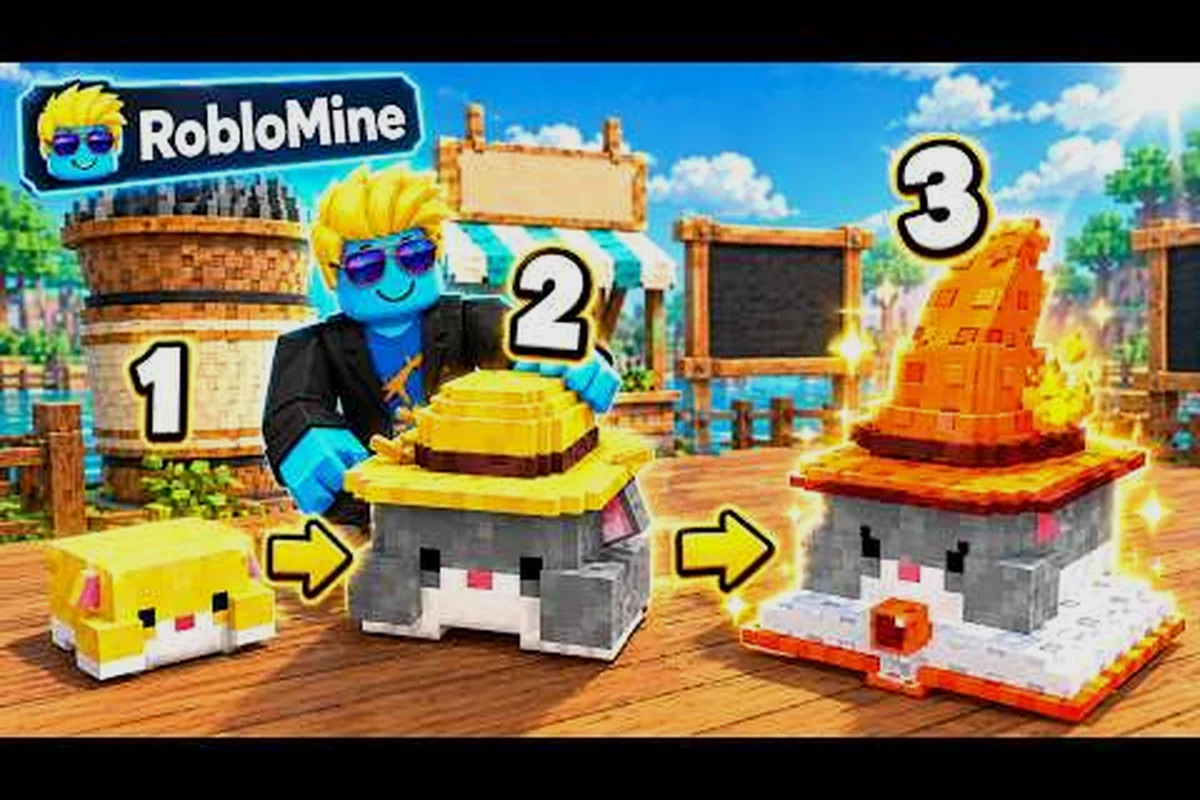
Hamster Village for beginners is one of the gentlest merge tycoons on Roblox, but the first hour still punishes players who buy the wrong hamster, skip deposits, or merge before they have pairs to spare. This starter guide distills what actually moves the needle in the opening 60 minutes so new players can skip the trial-and-error loop and start compounding Seeds into Money within their first session.
The game launched on 2026-08-19 from the verified developer group Dojo Empire, and as of 2026-09-26 it has crossed 2.27 million visits with a healthy 98% positive rating from roughly 66.8K favorites and 19K likes. That early traction matters because it means the economy is stable, updates ship regularly, and the loop you learn in your first hour will not be patched away next week. If you want a deeper mechanical breakdown alongside the basics covered here, the broader Roblox game walkthrough layers extra context on top of these first-hour steps.
Hamster Village in One Sentence: Buy, Drop, Deposit, Grow
Hamster Village is a single-loop merge tycoon: you buy hamsters, they auto-drop Seeds over time, you collect and deposit Seeds for Money, and you spend that Money on more hamsters or on merging pairs into higher tiers. There are no codes, no VIP servers, no daily login bonuses, and no seasonal events baked into the progression system, so every gain comes from the same core engine. That sounds simple, and it is, but the choices you make in the first ten minutes determine whether your first hour feels like steady growth or a flat plateau.
The Resource Stack You Actually Manage
Hamster Village really only juggles four resources, and understanding their relationships is the foundation of every smart decision you make in the opening hour. Beginners who internalize this table early tend to avoid the most common early mistakes, like hoarding Seeds, panic-merging, or buying hamsters they cannot afford to merge.
| Resource | What It Does | Source | Where It Goes |
|---|---|---|---|
| Hamster | Drops Seeds automatically | Shop (purchased with Money) | Merged in pairs, placed in habitats |
| Seeds | Raw currency dropped by hamsters | Drops from hamster habitats | Deposited at the Seed collector |
| Money | Spendable currency | Converted from deposited Seeds | Shop purchases, merges, unlocks |
| Tier Level | Multiplier on Seed output | Achieved by merging higher tiers | Unlocks new shop rows and merge slots |
The flow is Hamster → Seeds → Money → Hamster, with the Tier Level acting as a permanent multiplier on the second step. Higher-tier hamsters drop Seeds noticeably faster, which is why pushing at least one hamster to tier 2 or 3 in your first hour is the single biggest accelerator available to new players.
Why the First Hour Matters
Most merge tycoons follow a similar pattern: the first few minutes feel slow, then a single smart purchase triggers a positive feedback loop that compounds for the rest of the run. Hamster Village is no different, and the official game page confirms the design intent: the early loop is short and deliberate so that beginners can grasp the merge chain without hand-holding tutorials. If you get the first hour right, you walk away with at least one tier-2 hamster, a steady Seed trickle, and a Money balance that lets you start experimenting with merges on your own.
Players who ignore the first hour tend to fall into one of three traps: buying too many tier-1 hamsters they can never afford to merge, sitting on Seeds instead of depositing, or chasing visual upgrades that cost Money without raising tier. All three waste the most important resource in any tycoon, which is time, and the beginner tips reference flags the same patterns in its noob section.
The Clean Opening Routine That Removes Guesswork
A clean opening routine removes the guesswork from your first hour. The official store page recommends starting by buying the cheapest hamster, collecting Seeds as they drop, and depositing early so the Money engine turns over instead of stalling. That is the correct instinct, but there are a few extra details that smooth out the early game for players learning how to play Hamster Village on Roblox for the first time.
The Starter Purchase Decision
Your first hamster should always be the cheapest option in the shop. This is not a trick or a hidden strategy: the cheapest hamster costs the least Money, returns Seeds at a reliable rate, and gives you the most room to learn the loop before you risk a bigger purchase. Resist the urge to spend your starting Money on a more expensive hamster for cosmetic reasons, because the difference in Seed output between the cheapest and the second-cheapest hamster is negligible in the first ten minutes.
Once you have the cheapest hamster, let it run for a full drop cycle before doing anything else. This teaches you the actual drop rate, which is something you cannot learn from reading guides, and it gives you a baseline for comparing every hamster you buy later. If you want a deeper purchase-order breakdown, the complete Hamster Village guide walks through what to buy first once you have a few hundred Money saved up.
The Deposit Loop
The deposit step is where most beginners lose their momentum. Seeds accumulate in your inventory without producing Money until you deposit them, and a player who forgets to deposit for five minutes is effectively paying for storage they cannot use. Set a mental rule for your first hour: deposit every time your Seed count crosses a round threshold, and never let Seeds sit past the second drop cycle.
| Seed Count | Recommended Action | Why |
|---|---|---|
| 0 to 50 | Collect and deposit immediately | Builds habit, keeps Money flowing |
| 50 to 150 | Deposit at next round milestone | Prevents inventory clog |
| 150+ | Deposit now, then check hamster tier | High Seed counts signal you are ready to buy |
This is a simple rhythm, but it scales with your progress. By the time you have a tier-2 hamster dropping 100+ Seeds per cycle, you will be depositing on a near-constant loop, and that is exactly what the economy expects from active players.
The Seed-to-Cash Engine
The seed-to-cash loop is the entire progression system in Hamster Village, and the only way to make it run faster is to raise your hamster tier. Higher tiers drop Seeds faster, which means more deposits per minute, which means more Money per minute, which lets you buy more hamsters and merge them faster. This is the only positive feedback loop in the game, and your first-hour goal is to trigger it at least once.
Reading Your Drop Rate
A hamster's drop rate is not displayed numerically, but you can measure it yourself with a simple stopwatch test. Place the hamster, wait for the first drop, then count how many Seeds accumulate in 60 seconds. Doing this for your first three hamsters gives you a real baseline, and the difference between a tier-1 and a tier-2 hamster is usually obvious within the first two cycles. This is the kind of practical data that no guide can hand you, because the actual numbers shift slightly with each game patch.
Players who skip this step often merge too early or too late, because they have no intuition for what "fast" actually looks like. A two-minute investment in watching your hamsters work pays off for the rest of your run, and the merge deep-dive at Hamster Village merge benefits uses the same hands-on approach to teach the merge timing.
Spend Versus Save: The First-Hour Balance
The most common first-hour mistake is spending Money the moment it appears in your balance. That feels productive, but it usually means buying a hamster you cannot afford to merge, which leaves you with three or four tier-1 hamsters that drop Seeds at the same slow rate. A better rule is to keep a Money floor of at least twice the cost of your next intended purchase so that you always have buffer for a merge if a pair lines up.
| Money Range | Spend Priority | Merge Priority |
|---|---|---|
| 0 to 100 | Buy cheapest hamster | Do not merge |
| 100 to 300 | Save for second hamster | Merge only if you have a free pair |
| 300 to 600 | Buy second hamster | Merge as soon as a pair is available |
| 600+ | Begin tier-push strategy | Merge aggressively |
Notice how the merge priority changes as your balance grows. Early on, merging is a trap because it consumes two hamsters you could be using to generate Seeds. Later, merging becomes the priority because a tier-2 hamster produces more Seeds than two tier-1 hamsters combined. Crossing that threshold is the single biggest milestone of your first hour.
Merges That Actually Matter in the First Hour
Merges are the only way to raise your tier, and therefore the only way to make your Seed-to-Cash engine run faster. But not all merges are equal, and the merges you attempt in your first hour are the ones most likely to either launch your run or stall it. The official game page confirms that merging two matching hamsters produces a single higher-tier hamster, which then drops Seeds at a noticeably faster rate, so the mechanic itself is straightforward. The hard part is timing.
Timing Your First Ever Merge
Your first merge should happen as soon as you can afford to lose the two hamsters you are about to combine. For most beginners, this means waiting until you have at least three hamsters in your habitat, because that gives you a spare generator while your merged hamster is "settling in" or, more accurately, while you verify that the new tier actually drops faster. If you merge your only two hamsters, you briefly drop to zero Seed generation, which feels harmless but adds up to real lost Money over the rest of the hour.
A good first-hour target is one successful merge that produces a tier-2 hamster, then a second merge that produces a second tier-2 hamster if your Money balance allows. By the time you have two tier-2 hamsters generating Seeds in parallel, you have officially outgrown the starter phase and entered the mid-early loop where Money accumulation starts to feel rewarding.
Merge Anti-Patterns to Avoid
Every beginner falls into at least one of these traps during their first session. The good news is that they are easy to spot once you know what to look for, and the cost of recognizing them early is just a few minutes of slowed growth.
| Anti-Pattern | What It Looks Like | Cost |
|---|---|---|
| Premature merging | Merging your only two hamsters | Zero Seed generation during the merge window |
| Merge hoarding | Holding two pairs waiting for a "perfect" moment | Lost Money from delayed tier gain |
| Tier skipping | Saving Money to jump from tier 1 straight to tier 3 | Plateau if you cannot afford the merge |
| Visual chasing | Buying hamsters for looks, not output | Lower Seeds per Money spent |
The first two anti-patterns are mirror images of each other. Merge too early and you stall; merge too late and you overpay in Seed opportunity cost. The sweet spot is having one spare generator when you merge, which means owning at least three hamsters before you attempt your first pair combination.
Mid-Early Game Goals: What "Success" Looks Like
By the time you hit the 45-minute mark, you should be able to check off a few specific milestones that prove the first hour worked. If you cannot check off most of these, it is worth restarting or rolling a new server to practice the loop from scratch, because the cost of a bad first hour compounds throughout the rest of your run.
The 60-Minute Checklist
A successful first hour in Hamster Village is measurable, and the milestones below are what experienced players target when they spin up a new save. You do not need to hit every one of them, but hitting three or more usually means you have internalized the loop.
| Milestone | Target | Why It Matters |
|---|---|---|
| Money saved | 1,000+ | Enough to buy a third hamster comfortably |
| Tier-2 hamster | At least 1 | First measurable Seed multiplier |
| Merge pairs available | 2 or more | Ready for the next tier push |
| Habitat expansion | 1+ | Increases capacity for parallel generators |
| Seed deposits | 5+ deposits | Proves the engine is running |
Notice that none of these milestones are about cosmetics, codes, or events, because Hamster Village does not ship any of those. The progression system is entirely mechanical, and the only way to "win" the first hour is to set up the next hour for faster growth.
What Comes After the First Hour
Once you clear the milestones above, the game shifts from a tutorial-feeling loop into a genuine merge grind. Tier 3 becomes the next target, and from there each tier gets progressively harder to reach because you need more matching pairs to combine. This is also where the seed-to-cash engine starts to feel rewarding, because tier-3 hamsters drop Seeds at a rate that lets you afford merges without thinking twice.
If you are still feeling uncertain at the 60-minute mark, the step-by-step starter walkthrough is designed for players who want a more prescriptive path through the first hour, including exact Money thresholds for each purchase. That guide pairs well with the merge benefits reference for players who want to push their tier faster once the basics are in place.
The Three Errors Almost Every Beginner Makes
Even with a clean plan, most beginners hit at least one snag in their first session. The good news is that every common mistake has a simple fix, and recognizing the pattern early is the difference between a 30-minute recovery and a full reset.
Mistake 1: Spending All Starting Money
The biggest trap for new players is treating the starting Money balance as a budget to be spent immediately, rather than a seed to be grown. The fix is simple: spend only what you need to buy your first hamster, then let the loop run for at least one full drop cycle before your next purchase. This builds the habit of letting the engine turn over, which scales naturally as your balance grows.
Mistake 2: Ignoring the Deposit Button
Seeds do nothing until you deposit them, and a player who collects Seeds but forgets to deposit will quickly hit a soft cap where new Seeds stop dropping because there is no room. Make it a rule to deposit whenever your Seed count crosses a round number, and you will never run into this wall.
Mistake 3: Merging Without a Spare
Merging your only two hamsters is the most expensive mistake a beginner can make, because it stops your Seed generation for the entire merge window. The fix is to always keep at least one spare generator running, which means owning at least three hamsters before you attempt your first merge. This is the single highest-leverage habit in the early game, and the noob guide entry reinforces it as the cornerstone of the early loop.
Frequently Asked Questions
How do I start Hamster Village as a complete beginner?
Buy the cheapest hamster from the shop, place it in an empty habitat, and let it run for a full drop cycle before doing anything else. Collect Seeds as they drop, deposit them at the Seed collector to convert into Money, then buy a second hamster once your balance allows. The full Hamster Village for beginners loop is buy, drop, collect, deposit, repeat, and your first merge should wait until you own at least three hamsters so you never drop to zero Seed generation.
What should I buy first in Hamster Village?
The cheapest hamster in the shop is the correct first purchase, and the second-cheapest hamster is the correct second purchase once your Money balance supports it. Resisting the urge to spend on cosmetic or premium hamsters early keeps your Money engine growing instead of stalling. After your first successful merge, redirect Money into matching pairs to push toward tier 2, which is the real accelerator of the early game.
How long should my first hour of Hamster Village last?
Plan on a full 60 minutes for your first session, because the first 20 minutes feel slow even when you are doing everything right. The mid-20 to 40-minute window is where your first merge should land, and the final 20 minutes is where tier-2 hamsters start producing noticeably faster Seeds. By the 60-minute mark, you should have at least one tier-2 hamster and a Money balance that lets you start the second hour on a stronger footing.
Can I redeem codes in Hamster Village?
No. Hamster Village does not ship a code redemption system, and there are no VIP servers or private lobbies either. Progression is entirely driven by the seed-to-cash loop, hamster merges, and tier unlocks, so any website claiming to have working Hamster Village codes is either out of date or referring to a different game. The official Roblox game page is the best source for current features, and updates ship directly into the live game without requiring codes.
Is Hamster Village safe for younger Roblox players?
Hamster Village is published by the verified developer group Dojo Empire, and the game itself contains no chat-based interaction, no user-generated content, and no competitive multiplayer. The merge tycoon loop is appropriate for the Roblox audience, and the cute-animal theme makes it one of the more kid-friendly entries in the merge genre. Parents who want extra peace of mind can review the official Roblox game page for current ratings and content descriptors before letting younger players join.