
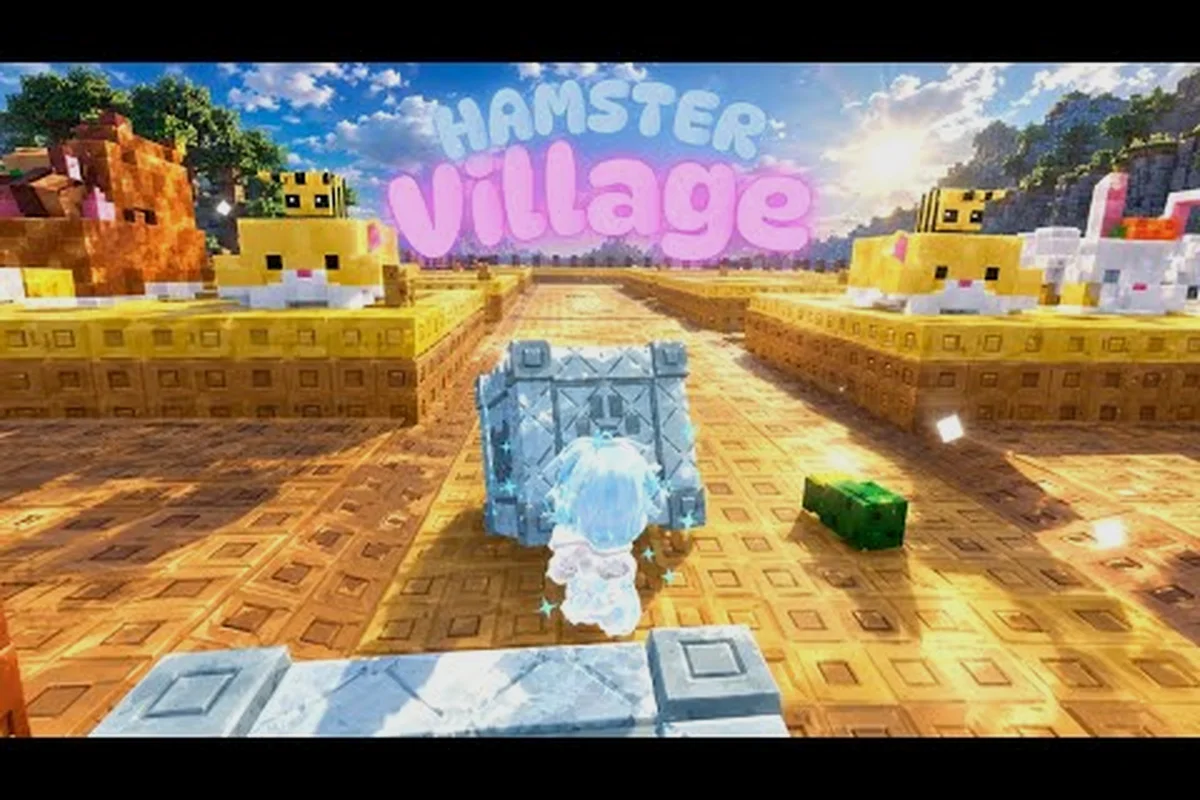
Hamster Village new features have shifted the merge tycoon meta several times in 2026, and missing a single patch can leave your seed engine two tiers behind the curve. Dojo Empire rolls out updates on a tight cadence, which means every player — from casual droppers to roster completionists — needs a reliable way to read the release notes fast. This guide breaks down the most recent additions, explains the patterns behind the developer update cycle, and shows you how to read the schedule so you never walk into a server mid-patch.
The Recent Patch Cycle and What "New" Actually Means
When players talk about Hamster Village new features, they usually mean anything Dojo Empire has pushed since the last server reset — but the term covers a wider range of changes than most people realize. The official game page frames the loop as buy hamsters, drop seeds, deposit, merge, and the team has leaned into that framing with their "Shutdown = Update" philosophy. Almost every meaningful patch is dropped when servers come back online rather than via a hotfix, which makes the update time predictable once you understand the rhythm.
According to the official Hamster Village game page, the studio treats the merge-tycoon loop as a living system: hamsters drop seeds, seeds become money, and money buys higher tiers. Every developer update Dojo Empire ships is built around one of those four nodes, so when you read update release notes the categories tend to be hamster additions, seed economy tuning, merge cost adjustments, and quality-of-life changes to the deposit or board layout systems.
How Often Dojo Empire Actually Updates
Community tracking of the update schedule shows the studio typically pushes a meaningful patch every 7 to 14 days, with smaller balance tweaks rolled into the same Shutdown = Update windows. That means hamster village how often updates feels "weekly" during active development phases, but can stretch to a fortnightly cadence during holidays or when the team is preparing a larger content drop.
| Phase | Typical Cadence | Typical Scope |
|---|---|---|
| Active season (Aug–Oct 2026) | 7–10 days | New hamster, balance pass, QoL |
| Pre-event prep | 10–14 days | Event teases, board cosmetics |
| Holiday windows | 14–21 days | Cosmetic-only or bonus seed drop |
| Post-major-content cooldown | 14+ days | Bug fixes, drop rate nudges |
The update time of day also follows a pattern. Most Hamster Village update release notes go live between 12:00 and 18:00 UTC, which lines up with the developer's working hours. Players in NA time zones generally see the patch drop in the morning, while EU players catch it in the early afternoon — a useful window to know if you want to be first back into a fresh server.
What Counts as a "New Feature"
Not every patch entry that shows up in the release notes is a feature in the gameplay sense. Dojo Empire labels new entries along a spectrum, and learning to read that spectrum saves you from over-investing in something that will be rebalanced next cycle.
| Label | What It Actually Means | Player Action |
|---|---|---|
| New Hamster | New tier or variant added to the merge chain | Save seeds for the unlock event |
| Balance | Existing hamster's drop rate or cost shifted | Re-run your tier math |
| QoL | UI, deposit speed, board layout, or chat change | Adopt immediately |
| Bug Fix | Seed spawn or merge reward glitch patched | No action needed |
| Event Drop | Limited-time hamster or seed multiplier | Grind during the window |
Hamster and Seed Additions Across the 2026 Patches
The most visible hamster village new features this year have been additions to the hamster roster. Dojo Empire has been steadily extending the merge chain upward, which is significant because each new tier multiplies the seed income of every hamster below it once a merge is achieved. Community counts of the full roster put the active hamster count above 40, with new variants slotted into the rare and special tiers as the year progresses.
New Hamsters Worth Merging Toward
The recent additions have skewed toward the rare and epic bands, which is where the marginal seed-per-minute (SPM) gains are largest. Tracking the the complete hamster roster list helps you spot where the new entries sit in the chain, but the practical takeaway from the 2026 release notes is that you should stockpile seeds whenever a new rare is announced rather than spending them on safe merges.
-
New Special-Tier Hamster (added late 2026): Highest base SPM in the current chain; requires four rare merges as input.
-
Expanded Epic Roster: Two new epic variants inserted above the previous epic ceiling; the merge cost is steep but the seed return justifies the grind.
-
Rare-Tier Filler: A handful of filler hamsters were added to the rare band to smooth out merge paths for newer players.
-
Rebalanced Common Hamster: A starter hamster was retuned upward to make the first 30 minutes less grindy, per community feedback.
Seed Economy and Drop Rate Tuning
The seed economy is where most hamster village update release notes have a hidden impact. A 5% drop-rate buff on a single mid-tier hamster can shift the entire meta, because that hamster's seeds feed the merges that unlock the next tier. Dojo Empire has been conservative here — drop rate changes are usually small, single-percentage-point buffs — but the cumulative effect over six months of patches is substantial.
| Patch Window | Seed Economy Change | Practical Impact |
|---|---|---|
| Early 2026 | Starter hamster drop rate +8% | Smoother first-hour grind |
| Mid 2026 | Rare-tier drop interval shortened | Faster rare unlocks |
| Late 2026 | Deposit multiplier cap raised | Better passive income ceilings |
| Event patches | Temporary 2x seed bonus | Limited-time SPM boost |
Reading the hamster village update release notes with that table in mind lets you predict how a single seed economy number will ripple through your board. For a deeper look at the seed pipeline mechanics, the Hamster Village update log tracks every seed-related tweak in chronological order.
Quality-of-Life Features That Changed the Daily Loop
Quality-of-life changes are the easiest hamster village new features to miss because they don't show up as new icons or new hamsters on your board. They tend to be small interface or interaction tweaks that shave seconds off repetitive actions — and seconds compound when you're running a merge loop for an hour. The 2026 patches have shipped more QoL work than the previous year, which is consistent with Dojo Empire's stated focus on retention.
Deposit, Collection, and Board Layout
The deposit pipeline — hamsters drop seeds, you collect, you deposit, you earn money — has had three measurable QoL improvements in 2026. The most-cited one is auto-collect range, which lets a hamster's seeds pull directly into the deposit zone when the hamster sits on a marked tile. Before the change, players had to physically walk over each hamster to grab the seed; after the change, ranged collection cuts the click cost per hamster by roughly half during active play.
A second QoL change worth noting is the board slot indicator, which highlights board squares where a hamster is about to finish its drop cycle. The visual cue doesn't speed up the merge, but it removes the guesswork about which hamster is "ready" to be collected, and the indirect effect is a cleaner, less interrupted deposit rhythm.
The third QoL addition is the merge preview tooltip, which shows the resulting hamster's tier and approximate seed rate before you confirm a merge. This one is small but it changed how veterans plan their merge order, because the tooltip lets you compare two adjacent merge options without committing coins. Together these three changes don't look dramatic in the release notes, but they are the most consistently praised hamster village new features of the year.
Mobile and Cross-Platform Tweaks
Dojo Empire also pushed several mobile-specific improvements, which matters because a meaningful share of the player base runs the tycoon on a phone or tablet. The mobile patches in the 2026 update release notes have mostly targeted tap-target sizing and camera zoom, both of which were pain points flagged in community feedback threads.
| QoL Change | Platform | Effect |
|---|---|---|
| Auto-collect range | All | Fewer clicks per cycle |
| Board slot indicator | All | Less guesswork on drops |
| Merge preview tooltip | All | Better merge planning |
| Tap-target resize | Mobile | Easier mobile board management |
| Camera zoom unlock | Mobile | Better visibility on small screens |
The Update Schedule and How to Read the Release Notes
The hamster village update schedule is one of the most-searched pieces of information around the game, and a lot of that traffic comes from players who want to plan their grind around a known patch window. The honest answer is that Dojo Empire doesn't publish a fixed calendar, but the pattern of the past six months makes the cadence very predictable.
How Restarts Deliver the Patch
The "Shutdown = Update" model means that when you see a server go down for maintenance, what comes back is almost always a patched version of the game. This makes the update time easy to triangulate: if you play long enough to see two or three shutdowns, you can usually predict the third within a day or two. Community-run trackers log every shutdown and cross-reference it against the next batch of release notes, and the data lines up with the table below.
| Weekday | Likelihood of Patch | Typical Reason |
|---|---|---|
| Wednesday | High | Mid-week balance pass |
| Friday | Medium | Content drop before weekend traffic spike |
| Saturday | Low | Emergency fixes only |
| Sunday | Low | Prep for Monday content |
If you want to be online for a fresh patch, logging in right after a Wednesday or Friday shutdown is the highest-probability play. Watching the official developer update channels (X, Discord, YouTube) gives you a heads-up roughly 30 minutes before the shutdown completes, which is enough time to wrap your current session without losing progress.
Decoding the Release Note Format
The hamster village update release notes follow a fairly consistent structure, which makes them easier to scan once you know what to look for. Most patches open with a one-line summary, then break out into sections that match the four core loop nodes: hamsters, seeds, money, and merge. New hamster announcements are usually pinned at the top, with balance changes below, and QoL changes near the bottom.
Here is the typical structure of a Dojo Empire patch post:
-
Header: Patch number or "vX.X" label plus a one-line theme.
-
New Content: Any new hamster, board, or cosmetic additions.
-
Balance Changes: Drop rate, merge cost, and deposit multiplier adjustments.
-
Bug Fixes: A bullet list of the issues addressed in this patch.
-
Upcoming: A teaser of what the next patch is likely to contain.
Once you read the release notes through that lens, the hamster village update time for any given feature is roughly the difference between the patch's drop date and the next shutdown window. Players who track this actively can usually predict the next major hamster addition a full cycle in advance.
Practical Strategy: Adapting Your Board to New Features
Every hamster village developer update changes the math of an optimal board, and the players who adapt fastest are the ones who treat new features as inputs to their merge plan rather than surprises. The pattern is straightforward: when a new hamster is announced, stop spending seeds on cosmetic merges; when a drop rate is buffed, redirect your hamster placements toward the buffed entry; when a QoL change ships, rebuild your board to take advantage of the new interaction range.
Preparing Your Board Before a Patch
The single highest-leverage habit for handling new features is to keep a seed reserve of at least 15% of your current balance in the bank before any scheduled shutdown. This reserve gives you the flexibility to pivot toward a new hamster if the patch adds one, or to ignore the new content if the patch is a balance pass that doesn't benefit your board. Most veteran players also clear their board of low-tier filler hamsters before a shutdown, so that any new entries they merge in start from a clean slate.
A second habit is to screenshot your current board and merge chain before every patch. If the new release notes contain a rebalance that hits one of your key hamsters, having a reference of your pre-patch state lets you audit the impact quickly and decide whether to rebuild or stay the course. The merge preview tooltip, mentioned earlier, makes this kind of audit much faster than it used to be.
A Sample Pre-Patch Checklist
-
Reserve 15% of seeds in a non-spending buffer.
-
Screenshot your merge chain and current board layout.
-
Check the developer update channel 30 minutes before any shutdown.
-
Read the release notes as soon as the server returns.
-
Audit the four loop nodes (hamster, seed, money, merge) for any changes that touch your current build.
Players who follow a checklist like this tend to be the first to merge the new hamster tiers, because they have both the seed stockpile and the board clarity to pivot the moment a feature drops. For a longer look at how to plan grind sessions around the update cycle, the Hamster Village time efficiency guide walks through milestone-based progression that pairs well with this pre-patch routine.
How New Features Connect to the Wider Dojo Empire Roster
Hamster Village is one of several titles under the Dojo Empire label, and the developer update for the village often teases — or mirrors — work happening on those sibling games. The shared studio approach means that when a new feature drops in one tycoon, there's a reasonable chance a similar mechanic appears in the others within a few cycles. This is a useful pattern to track if you play multiple Dojo Empire games, because the meta in each title tends to drift in the same direction over time.
The cross-title pattern is also relevant to hamster village how often updates, because the studio's release calendar is shaped by their broader portfolio. When a major content push lands on a sister title, the village's update cadence usually slows to a maintenance-only rhythm, and the inverse is also true. Watching the Hamster Village next update tracker is a good way to spot this kind of slowdown in advance, since it logs the gap between consecutive patches and flags any unusual stretches.
What to Expect From the Rest of 2026
The bottom line on hamster village new features for the rest of 2026 is that the cadence will stay roughly weekly during active development windows, the new content will continue to skew toward rare-tier hamster additions, and the QoL changes will keep leaning into mobile usability. Players who keep a small seed reserve, screenshot their boards before shutdowns, and read the release notes through the four-node loop will be the ones who turn every new feature into progress instead of confusion.
Frequently Asked Questions
How often does Hamster Village get new features?
Based on community tracking, the developer update cadence is roughly every 7 to 14 days, with the tighter window during active season phases. Most meaningful patches land on Wednesdays or Fridays, and the team uses the Shutdown = Update model so the new content is live the moment servers return.
Where can I read the official Hamster Village update release notes?
The official release notes are posted on the studio's X account, the official Discord server, and the game's YouTube channel. The official Hamster Village game page also reflects the current feature set, and community wikis mirror the patch list for easier searching.
What time of day do Hamster Village updates usually drop?
Most patches go live between 12:00 and 18:00 UTC, which translates to morning in NA and early afternoon in EU. The update time is consistent enough that players can plan to be online roughly 30 minutes after a scheduled shutdown to catch the fresh server.
Do new features reset my progress in Hamster Village?
No, hamster village new features do not reset your board, seeds, money, or hamster collection. The Shutdown = Update model preserves all player data, and the only time progress is affected is when a balance change rebalances the value of an existing hamster or seed rate.
How do I prepare for a Hamster Village developer update?
Reserve about 15% of your seeds in a non-spending buffer, screenshot your current board and merge chain, and read the release notes the moment the server returns. That preparation lets you pivot toward a newly announced hamster or absorb a balance change without scrambling.