
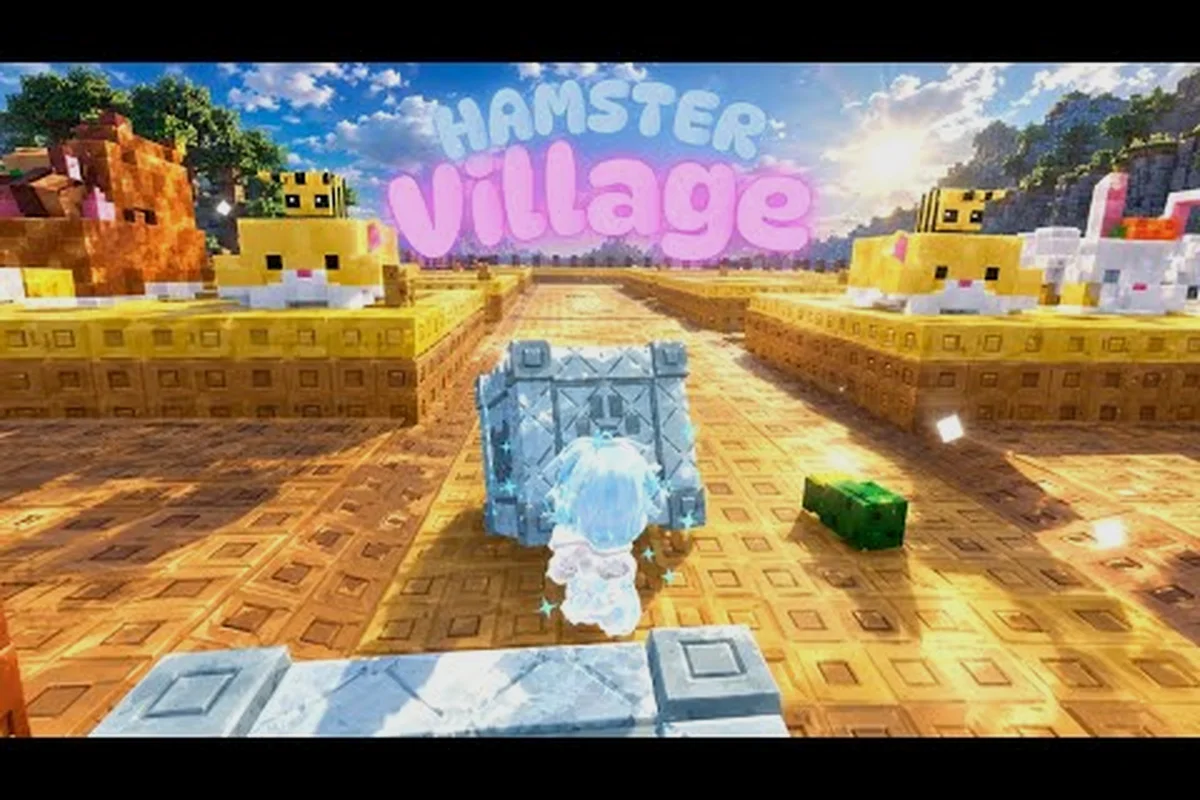
Time is the only resource you cannot buy back in Hamster Village, and the players who treat the seed-to-money-to-merge loop like a clock rather than a checklist consistently outpace those who grind blindly. The gap between a casual first hour and a smart first hour is the difference between owning three tier-one hamsters and walking away with a half-built mid-game roster. According to the official Hamster Village page on Roblox, the loop is straightforward — buy hamsters, collect seeds, deposit for money, merge up the chain — but the order in which you spend every minute is where real hamster village time efficiency is built. This guide breaks down the AFK strategy, the active play boosts, and the progress milestones that decide how fast new hamsters appear in your village.
Why a Time-First Mindset Beats a Buy-First Mindset
Most new players in Hamster Village treat money as the bottleneck. After a few minutes the inventory fills with low-tier hamsters, the seed boxes stack up, and the urge to spend on the next cute face takes over. According to community data, players who buy on impulse usually stall in the Common tier because every coin spent on another Common pulls money away from the merge that would have produced a Rare or better. The smarter play treats time as the actual currency: every minute your hamsters sit on the board dropping seeds is a minute that compounds into the next tier.
A clean way to frame hamster village time efficiency is to ask, "What earns more per minute: another low-tier hamster or a faster seed drop?" The answer changes as you climb. Early on, board coverage matters because the timer is the constraint. Mid game, a single mid-tier hamster outperforms three Common slots, which means the next minute is better spent waiting for a merge than buying filler. The same logic pushes late-game players toward the highest tier they can sustain rather than the largest collection.
This mindset also reshapes how you log out. Instead of a chaotic board with ten tier-one hamsters, you leave a small, dense board where every slot earns more than the slot it replaced. That density is the engine behind hamster village time efficiency, and it scales much further than raw buying power.
Mapping Your Session to the Core Loop
Each play session in Hamster Village is really three nested loops running at different speeds: the seed-drop loop (seconds), the deposit loop (minutes), and the merge loop (tens of minutes). Players who understand which loop is bottlenecking them right now can reroute their attention instead of grinding the wrong one.
| Loop | Cycle Time | What You Do | What It Unlocks |
|---|---|---|---|
| Seed-drop | 15-60 sec per hamster | Wait, pick up dropped seeds | Seeds for the next deposit |
| Deposit | 2-5 min | Carry seeds to the deposit zone | Money for the next hamster or upgrade |
| Merge | 15-45 min | Buy matching pairs, combine | A higher-tier hamster that drops more seeds |
When seed drops feel slow, you do not need more money — you need higher-tier hamsters, which means you need merges, which means you need saved money. Recognizing the right loop is the first practical win in hamster village time efficiency.
The AFK Strategy: Building a Board That Earns While You Sleep
The single biggest leap in hamster village time efficiency comes from learning how to leave the game. Server shutdowns double as updates — the "Shutdown = Update" cycle confirmed on the official Hamster Village page — so every offline moment is also a soft reset point. Building a board that survives the gap between sessions is therefore the foundation of the AFK strategy.
What an AFK-Ready Board Looks Like
A board tuned for hamster village time efficiency is not the largest possible board. It is a small, dense setup where every slot outperforms the slot next to it. A typical AFK-ready board at the 30-minute mark looks like this:
| Slot Position | Hamster Tier | Why It Earns |
|---|---|---|
| Center | Highest tier unlocked | Fastest seed drop, anchors the board |
| Surrounding | One tier below center | Backup droppers that out-earn Common slots |
| Corners | Lowest tier owned | Fodder for the next merge, not for output |
Players report that trimming a board from 12 Common slots to 6 mixed slots often produces a higher seeds-per-minute total because the merged hamster drops faster and the deposit walk is shorter. The shorter walk alone is a quiet but real upgrade to hamster village time efficiency.
AFK Timing Windows That Actually Work
Not every AFK break is equal. The two windows that consistently pay off are the 20-to-40-minute window and the overnight window. The short window is the sweet spot for a fresh merge — the hamster finishes warming up, drops a full cycle, and you return to a clean deposit. Overnight works best when the highest-tier hamster is already on the board and the deposit zone is reachable from your spawn, so the first action on return is "collect everything," not "figure out where the deposit is."
The windows that hurt hamster village time efficiency are mid-merge windows, where you log out before the next matching hamster is bought, and post-merge windows, where you log out before the new hamster's first drop cycle. Both force a wasted warm-up on the next login.
The Active Play Strategy: Spending Every Click on a Multiplier
Active play in Hamster Village is not about clicking faster. It is about sequencing actions so each click multiplies the value of the next one. The best hamster village time efficiency players treat active sessions as a series of decision windows rather than a continuous grind.
The 90-Second Active Cycle
A well-run active session runs on a 90-second cycle: walk the board, collect seeds, deposit, return to the highest-purchase hamster, place it, and start the next loop. The cycle works because it matches the seed-drop timers of most mid-tier hamsters and keeps the deposit queue from backing up.
| Phase | Time Budget | Action | Output |
|---|---|---|---|
| 0-30 sec | Collect | Pick up all seed drops | Seeds in hand |
| 30-60 sec | Deposit | Carry to deposit zone | Money in bank |
| 60-90 sec | Invest | Buy hamster or upgrade | New income source |
| Reset | Repeat | Restart the loop | Compound growth |
When the deposit phase is skipped, the next active cycle starts with a full inventory and a slower walk, which is the fastest way to lose hamster village time efficiency. The 90-second rhythm is the cheapest way to stay ahead of the timers.
When to Stop Active Play
Active play is also about knowing when to stop. According to community data, the returns on active grinding drop sharply once a player has three or more mid-tier hamsters and a passive income that exceeds their click rate. At that point, switching to a half-attentive session — collect on timer, deposit on cooldown, merge when matched — produces the same hamster village time efficiency without the burnout that leads to sloppy merges.
Progress Milestones: The Markers That Decide Your Unlocks
Milestones are the checkpoints where hamster village time efficiency pays off. Each one is a measurable change in what your board can do, and each one unlocks a different part of the hamster roster. Chasing milestones rather than random upgrades is the cleanest way to structure a long-term plan, and it pairs naturally with the hamster village max efficiency progression guide for a deeper breakdown of mid- and late-game transitions.
Milestone Map for 2026
| Milestone | Approx. Time | What Unlocks | Strategy Shift |
|---|---|---|---|
| First Rare merge | 20-40 min | First Rare hamster | Begin trimming Common slots |
| First Epic merge | 1-2 hr | First Epic hamster | Switch to a 90-sec active cycle |
| First Special tier | 3-5 hr | First Special hamster | AFK window becomes reliable |
| First Legendary | 8-12 hr | First Legendary hamster | Board rebuild around single anchor |
| Full mid-tier board | 1-2 days | Stable income engine | Shift focus to collection unlocks |
The exact timing varies by playstyle, but the order is reliable. Players who hit these milestones in order tend to report smoother hamster village time efficiency because each milestone is a prerequisite for the next strategy shift.
Why Milestone Order Matters
The temptation for hamster village strategy for beginners is to rush the first Legendary and skip the Epic and Special tiers. The data does not support that path. Each tier jump is a non-linear gain in seeds-per-minute, but the merge that produces the jump is expensive, and skipping a tier leaves a gap in your roster that the next merge cannot fill cheaply. A clean milestone path is the difference between a board that scales and a board that stalls.
The order also decides your hamster village how to reach new hamsters fast. New hamsters do not appear from buying — they appear from merging and from the collection bonuses that trigger when the roster expands. Hitting milestones in the right order is the fastest route to those collection bonuses, and collection bonuses are themselves a multiplier on hamster village time efficiency.
AFK vs Active: Choosing the Right Mode for Each Phase
Hamster village time efficiency is not a single setting. It is a dial that turns between AFK and active depending on the phase. The art is recognizing which mode the current phase rewards, and switching when the returns change.
Phase-by-Phase Mode Recommendation
| Phase | Best Mode | Why | Watch For |
|---|---|---|---|
| First 30 min | Active | Boards are empty, every drop matters | Don't over-buy Commons |
| 30 min - 2 hr | Hybrid | 90-sec active cycles + short AFK | Don't leave mid-merge |
| 2 hr - mid game | AFK-heavy | Income engine is stable | Check before each long break |
| Mid to late game | AFK with check-ins | Board earns passively | Log in for collection unlocks |
| Late game | AFK-primary | Anchors earn more than active clicks | Reserve active for events |
This is also where hamster village advanced strategy diverges from hamster village strategy for beginners. Beginners benefit from more active time because every action teaches a system. Advanced players benefit from less active time because the systems are already running.
Switching Modes Without Losing Progress
The cleanest way to switch modes is to anchor the change to a milestone. Right after a merge that produced a new tier, switch to AFK for the next drop cycle — the new hamster needs warm-up time, and the old slots can coast. Right before a planned merge, switch to active so you can place the matching pair the moment the deposit clears. Anchoring mode switches to milestones keeps hamster village time efficiency high even when the player is offline.
Frequently Asked Questions
What is the most efficient first hour in Hamster Village?
Focus on board density rather than board size. Buy only what you can merge within the first hour, deposit on a 90-second cycle, and trim Common slots as soon as a Rare is unlocked. The first hour is where hamster village time efficiency habits are built, and the players who avoid the "buy everything" trap reach the Rare tier roughly twice as fast as players who do not.
Does the AFK strategy really beat active grinding?
For most players past the 30-minute mark, yes. Once a board has three or more mid-tier hamsters, passive income outpaces the value of constant clicking because higher-tier hamsters drop faster than the player can collect. The AFK strategy is hamster village advanced strategy applied to the part of the loop where the timer — not the click — is the constraint.
How fast can I reach new hamsters with the right milestones?
Players who hit milestones in the recommended order typically see the first Rare within 30-40 minutes, the first Epic within two hours, and the first Special tier within five hours of total playtime. The exact timing depends on session length, but milestone-driven play is the most reliable path to hamster village how to reach new hamsters fast without burning Robux.
Is hamster village time efficiency different on private servers?
The core loop behaves the same, but private servers often have fewer events and slower collection unlocks. Public servers tend to produce faster hamster village progress milestones because the broader population triggers more event activity, which is worth keeping in mind for players who want the fastest route to new hamsters.
What's the biggest mistake that hurts hamster village time efficiency?
Buying more Common-tier hamsters instead of saving for a merge. Every Common purchase past the point where a merge is possible is a coin that would have produced a higher-tier dropper, and the lost seeds-per-minute from that missed merge compounds across every minute that follows. Treating the merge as the goal — not the buy — is the single biggest upgrade a player can make.