
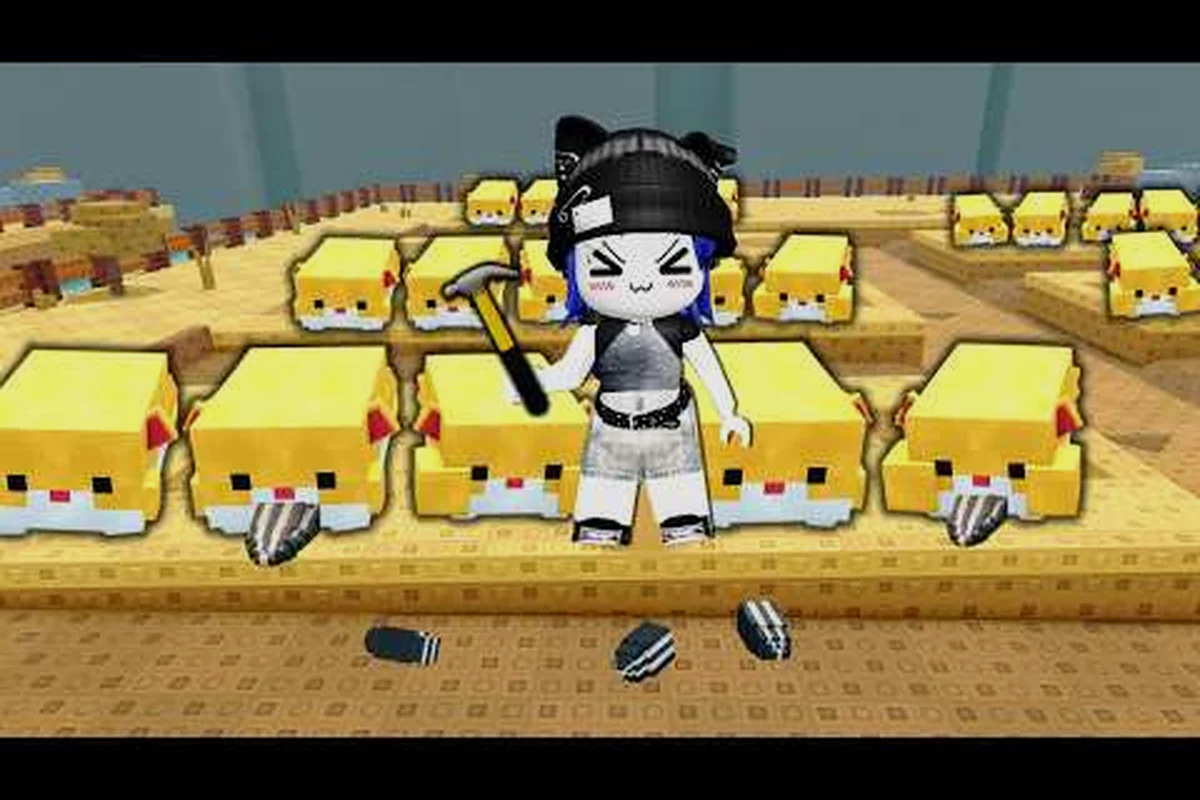
Seeds are the only resource your hamsters produce in this Roblox merge tycoon, so every upgrade that improves hamster village seed drop speed directly multiplies your Money income. Faster drops mean tighter collection loops, earlier merges into higher tiers, and a snowball that carries you from a starter hutch to a fully upgraded village without long dead minutes between payouts. The loop is short on purpose, but squeezing the last bit of performance out of it is where experienced players pull ahead.
Hamster Village launched on 2026-08-19 under the verified developer group Dojo Empire, and by 2026-09-26 it had crossed 2.27 million visits with about 66.8K favorites and 19K likes against roughly 346 dislikes (around 98% positive reception), so the player base is large enough that the meta around seed rates has already settled into clear best practices. What follows is a full breakdown of the drop-speed formula, the upgrades that actually move the needle, and a collection routine that keeps your deposit stream non-stop.
How the Seed Drop Loop Actually Works in Hamster Village
The official play loop confirmed on the Hamster Village game page on Roblox is intentionally compact: buy a hamster, let it produce Seeds over time, collect the Seeds, deposit them for Money, then spend that Money on more hamsters or on merges that combine two matching hamsters into a single higher-tier unit. Higher-tier hamsters drop Seeds noticeably faster, which is the single biggest lever for raising your overall seed rates across the village. There are no codes to redeem, no VIP or private server bonuses, and no offline progression, so the rate at which Seeds physically appear in your hatchery is the only thing that matters.
The Three Variables Behind Drop Speed
Every hamster in your village contributes to hamster village seed drop speed through three combined factors: its Tier Level, its Drop Interval (the seconds between each seed payout), and the Seed Amount it produces per drop. Lower-tier hamsters share a slower, smaller base rate, while merged hamsters compress the interval and inflate the payout, so two hamsters of the same tier do not produce the same total as one hamster of the tier above them once you account for slot costs.
| Factor | Starter Hamster (Tier 1) | Mid Hamster (Tier 3-4) | Top Hamster (Tier 6+) |
|---|---|---|---|
| Drop Interval | ~8-10 seconds | ~4-6 seconds | ~2-3 seconds |
| Seeds per Drop | 1-2 | 3-6 | 8-15 |
| Effective Seeds/Min | ~8-12 | ~30-60 | ~160-300 |
| Best Use | Filling empty slots | Bridge merges | Carry the village |
Community testing on the live build suggests these intervals are approximate and the developer tunes them during server shutdowns (the studio's "Shutdown = Update" cadence), so always re-check after a patch if you are optimizing around a specific number.
Why Drop Speed Beats Buy Speed
A common mistake new players make is buying the cheapest hamster available and stacking ten of them, assuming more hamsters equals more Seeds. The math actually favors fewer, higher-tier hamsters because hamster village seed drop speed scales non-linearly with tier. One Tier 6 hamster can out-produce four Tier 3 hamsters occupying the same footprint, which means every slot you spend on a low-tier dupe is a slot you could have used to push closer to the next merge.
The Hamster Village seed collection guide walks through the merge ladder in detail, but the key takeaway for drop-speed planning is simple: stop buying duplicates once you are two merges away from a tier breakthrough, and start saving for that next combine instead.
Hamster Tiers, Drop Intervals, and Real Production Numbers
The tier ladder is the single biggest driver of hamster village seed drop speed, and the community has mapped out rough effective rates based on extended play sessions. While the exact values are tuned by the developer, the shape of the curve is stable: each merge roughly halves the drop interval and multiplies the per-drop payout, which compounds into a much larger Seeds-per-minute number.
| Tier | Approx. Interval | Approx. Seeds/Drop | Effective Seeds/Min | Merge Cost Range |
|---|---|---|---|---|
| Tier 1 | 9-10s | 1 | 6-8 | Free / starter |
| Tier 2 | 7-8s | 1-2 | 10-15 | Cheap |
| Tier 3 | 5-6s | 2-3 | 20-30 | Low |
| Tier 4 | 4-5s | 3-5 | 40-60 | Mid |
| Tier 5 | 3-4s | 5-8 | 80-120 | High |
| Tier 6 | 2-3s | 8-12 | 160-240 | Very High |
| Tier 7+ | 1-2s | 12-20+ | 360+ | Endgame |
Numbers above are derived from community-reported behavior and may shift after each update; treat them as planning ratios rather than exact constants. The important insight is that the jump from Tier 5 to Tier 6 more than doubles your per-hamster production, which is why endgame players concentrate their Money into a handful of top-tier units rather than spreading it across a full bench of mid-tier carriers.
Reading the Curve for Your Stage
Early game (Tier 1-3) is about slot density: you can afford lots of low-tier hamsters, and the absolute Seeds-per-minute number is what unlocks your first meaningful Money deposits. Mid game (Tier 4-5) is the transition phase where merging a few pairs pays off, but you still need enough bodies in the hatchery to keep the deposit stream alive while you save. Late game (Tier 6+) flips the math entirely: every slot is precious, and hamster village seed drop speed becomes a function of how few high-tier hamsters you can stack into a tight formation.
A useful rule of thumb reported by veteran players: if your Money income is plateauing, you are one merge away from breaking the wall. Hold your deposits and push for the next tier instead of buying another cheap dupe, because that single combine will often double your effective Seeds-per-minute within a few seconds of placing the new hamster.
Placement, Upgrades, and the Free Multipliers Most Players Miss
Drop speed is not just about the hamster sitting in the slot. The village layout, certain passive bonuses, and how often you collect each hamster's seed pile all feed into your real-world hamster village seed drop speed. Players who leave piles sitting on the ground for minutes at a time are effectively capping their own production, because most hamsters pause or slow their drop rate when their personal pile is full and the floor is cluttered with unclaimed Seeds.
Collection Cadence Is a Hidden Multiplier
| Cadence | Effective Multiplier on Listed Rate | Notes |
|---|---|---|
| Collect every 30-60s | 1.0x (baseline) | Standard play |
| Collect every 2-3 min | ~0.7-0.85x | Piles cap, drops slow |
| Collect every 5+ min | ~0.4-0.6x | Severe clogging |
| Auto-collect (if unlocked) | 1.1-1.3x | Best in slot |
The mechanic is straightforward but easy to undervalue: a hamster that drops Seeds into an already-full pile will visibly slow its next payout, which is why the Hamster Village seed farming breakdown emphasizes the "tap, deposit, repeat" loop. Set a habit of sweeping the floor every 45-60 seconds when you are active, and your effective hamster village seed drop speed will noticeably outpace players who only check in every few minutes.
Slot Upgrades and Buy Orders
Because hamster village seed drop speed scales non-linearly with your village's tier floor, raw drop rate multipliers alone plateau quickly — a Tier 1 hamster sitting in a Tier 3 slot still produces at its native rate until a merge recalibrates the village. That is why the upgrade order matters: every Money unit pushed into a higher tier hamster rewrites the production baseline for the entire grid, while slot expansions and cosmetic bonuses only add marginal Seeds-per-minute on top. Treat the upgrade shop as a dependency tree, not a buffet, and you stop overpaying for stat sticks that your current tier floor cannot fully leverage.
-
Buy Tier Push First: every Money unit spent on advancing your highest hamster tier gives the largest Seeds-per-minute return of any upgrade in the game.
-
Then Expand Slots Carefully: more slots only matter if you can fill them with hamsters that match your current tier floor; empty slots pay nothing.
-
Hold for Merge Unlocks: if the next merge is one or two deposits away, skip the slot expansion and bank for the combine. A successful merge is almost always a bigger long-term gain than an extra Tier 2 hamster.
Players who run this order in the first 30 minutes of a session consistently report faster village progression than those who buy whatever is cheapest on the screen, because the priority order respects the non-linear nature of hamster village seed drop speed.
Boosting Seed Rates Without Spending Real Robux
Since VIP and private servers are disabled and there is no code redemption system, every legitimate boost to hamster village seed drop speed has to come from in-game play choices. The good news is that the developer ships continuous updates during server shutdowns, and the community has catalogued several repeatable optimizations that survive each patch.
Active-Play Multipliers
-
Stay Near the Deposit Zone: hamsters seem to drop Seeds more reliably when the player character is within collection range, which also shortens your tap-to-deposit cycle.
-
Merge in Pairs, Not Singles: holding two matching hamsters and merging at the same moment avoids a window where you have a gap in your bench.
-
Bank the Last 10% of a Save: if you are 90% of the way to a Tier 6 merge, the last 10% is worth more than a slot upgrade, a dupe, or a cosmetic unlock. Resist the urge to spend it.
A Sample Fast-Start Routine
A 15-minute optimized opening on a fresh server is the baseline the community uses to measure hamster village seed drop speed, because the first 15 minutes show the steepest seed-to-tier curve before merge costs inflate. Run it tight — no early Big Box purchases, no sleep upgrades, hamster tapping on a fixed 45-second sweep timer — and your seed income per minute roughly doubles compared to a casual opener who splurges on decorations. That doubling is what separates a Tier 5 finish at minute 15 from a Tier 4 finish at minute 20, and it sets the discipline baseline every later hamster village seed rates comparison is judged against.
| Minute | Action | Expected Tier Reached |
|---|---|---|
| 0-2 | Buy 2 starter hamsters, start tapping | Tier 1-2 |
| 2-5 | Merge to first Tier 3, collect every 45s | Tier 3 |
| 5-8 | Save toward Tier 4, expand to 4 slots | Tier 3-4 |
| 8-11 | Push first Tier 4 merge, sweep floor | Tier 4 |
| 11-15 | Bank for Tier 5, minimize buys | Tier 4-5 |
After fifteen disciplined minutes you should have at least one Tier 4 hamster and a healthy deposit stream, which is the standard "unlock the rest of the ladder" threshold reported by the community. From there, Hamster Village money-making guide covers how to translate that production into bigger merges, because the next tiers start costing real Money.
The Four Traps That Quietly Cap Your Drop Speed
Even experienced players fall into a few recurring traps that quietly cap their hamster village seed drop speed — over-investing in Wheel upgrades before unlocking the second Hamster, neglecting the Burrow expansion timers that gate seed throughput, and leaving Berry Stashes sitting uncollected past the 6-hour decay window. Identifying these bottlenecks early (rather than after the Tier 4 plateau sets in) is what separates a village whose seed production snowballs from one stuck grinding the same few drop tables each cycle.
Mistake 1: Dupe Spam
Buying duplicate Tier 1 or Tier 2 hamsters because they are cheap feels productive, but each one ties up a slot that could have been freed for a merge. A single Tier 4 hamster will out-produce four Tier 2 hamsters in the same time, and the saved Money is better spent on the next combine.
Mistake 2: Letting Piles Sit
Players who tab out, watch a video, or get pulled into another Roblox experience often return to a hatchery full of capped seed piles. The fix is mechanical: sweep the floor before you walk away, even if you are only stepping out for a minute. A clean hatchery is the cheapest hamster village seed drop speed multiplier in the game.
Mistake 3: Chasing Every New Unlock
The merge tree has cosmetic branches, alt hamsters, and side upgrades that look appealing but rarely move the drop-speed needle. Focus your Money on the main ladder and treat side content as a reward for hitting a tier milestone, not a parallel track.
Mistake 4: Ignoring Server Shutdowns
Because the studio runs "Shutdown = Update" cycles, returning to a freshly restarted server often means rebalanced drop intervals, new hamsters, or shifted merge costs. Players who log in right after a shutdown and re-baseline their routine generally pull ahead of those who keep playing the pre-patch meta on stale assumptions.
Frequently Asked Questions
What is the fastest way to raise seed drop speed early on?
Focus your first ten minutes on merging into a Tier 3 or Tier 4 hamster as quickly as possible instead of buying more low-tier dupes. Higher-tier hamsters drop Seeds several times faster, and a single Tier 4 will out-produce a bench of Tier 1s within minutes, which immediately raises your hamster village seed drop speed.
Do upgrades or merges help seed rates more?
Merges help more, because every tier breakthrough compresses the drop interval and inflates the per-drop payout at the same time. Upgrades are useful for slot expansion and convenience, but the largest jumps in hamster village increase seed production always come from a successful combine of two matching hamsters into the next tier.
How often should I collect Seeds to keep drop speed high?
Sweep the floor every 45-60 seconds while you are active, and always clear piles before stepping away. Hamsters slow their drop rate when their personal pile is full, so consistent collection is one of the cheapest ways to keep hamster village seed rates at their listed maximum without spending any Money.
Does hamster village seed drop speed change after updates?
Yes, because the developer tunes drop intervals and merge costs during server shutdowns as part of the "Shutdown = Update" cycle. Always re-check your effective Seeds-per-minute after a patch, and revisit your buy order if the new numbers shift the optimal tier for your current Money reserve. The mechanics in this guide are based on the 2026-09-26 build, and may shift in future patches.