
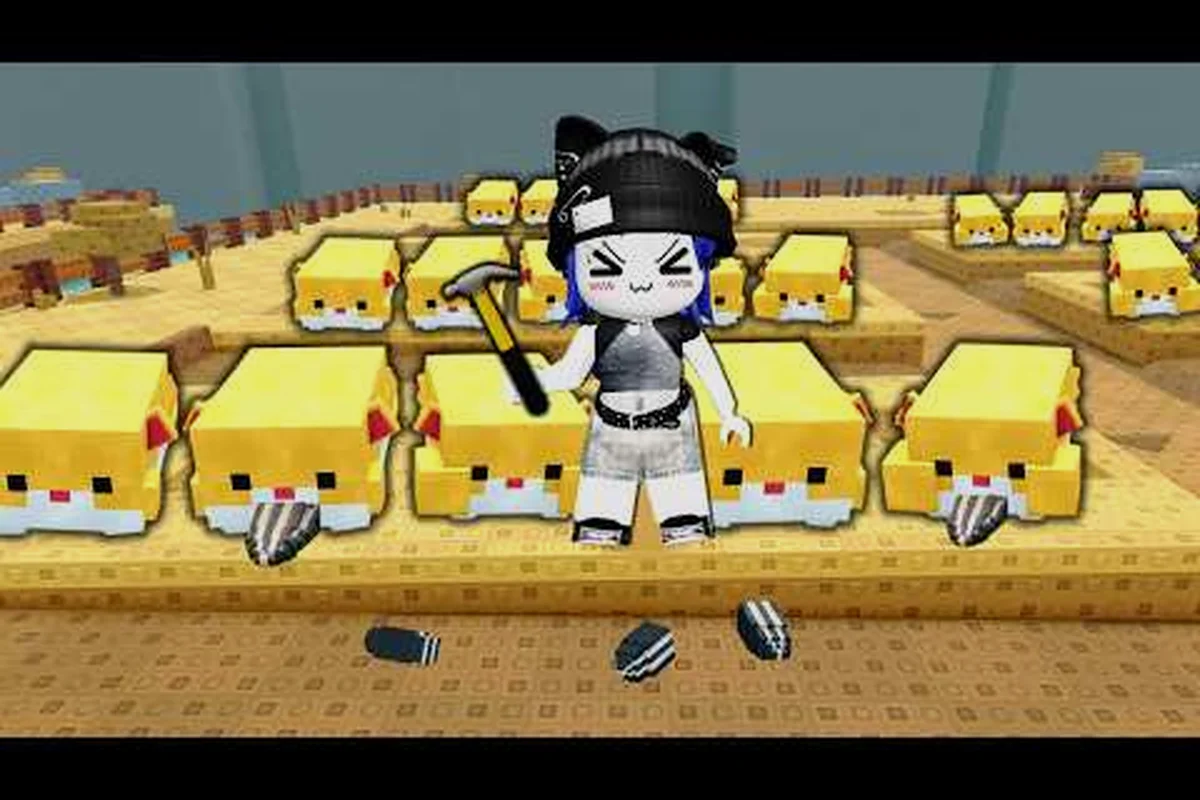
Speed is everything when you boot up a fresh save in Hamster Village on Roblox, because every minute you spend fumbling through the first few hamster tiers is a minute your neighbors on the leaderboard are pulling ahead with smarter seed deposits and earlier merges. This Hamster Village how to get money fast guide focuses on the exact sequence that turns a brand-new plot into a working money farm: the early hamster picks, the merge threshold where your income visibly jumps, and the upgrade priorities that compound your seed drops into reliable cash.
The game launched on 2026-08-19 from the verified developer group Dojo Empire and crossed 2.27 million visits with roughly 66.8K favorites and 19K likes against only 346 dislikes (about 98% positive) by 2026-09-26, with about 6.1K players online at peak sampling. That player base settled on a tight loop fast — buy hamsters, let them drop Seeds, collect and deposit those seeds for Money, then spend that money on more hamsters or on merges that push pairs of matching hamsters into a single higher-tier unit. There is no code redemption system and VIP/private servers are disabled, which means your progression is entirely driven by how efficiently you push Seeds through that loop, so learning the fastest path to a stable income is the single most important skill in the entire game.
Understanding the Money Loop in Hamster Village
Before you can optimize, you have to understand the four-part cycle that every tycoon run in this game is built on. The whole economy rotates around Seeds as the intermediate resource and Money as the spendable reward, and the only way to convert one into the other is to deposit a collected Seed at the central pad. That means a player who keeps Seeds sitting in their inventory instead of banking them is, in effect, leaving free money on the ground.
In plain terms, the loop looks like this: starter Money buys a hamster from the shop, that hamster passively drops Seeds at a tier-specific rate, you collect those Seeds via walking or your auto-collect radius, and you deposit the Seeds at the central pad where they convert back into spendable Money — and the key insight for anyone Googling "hamster village how to get money fast" is that this cycle has only one bottleneck worth optimizing, which is the time Seeds spend sitting in your inventory before deposit, because every unbanked Seed is a hamster purchase you have not yet made.
-
Buy a hamster from the shop using starting cash.
-
Wait for it to drop Seeds over time at its tier-specific rate.
-
Pick up the Seeds by walking over them or pulling them in with the auto-collect radius.
-
Deposit Seeds at the collector to convert them into spendable Money.
What makes the loop scalable is that higher-tier hamsters drop Seeds noticeably faster than lower-tier ones, and unlocking new tiers expands your roster so you can field more producers at once. The official Hamster Village game page on Roblox lays out this exact progression arc and notes that server shutdowns double as the developer's update windows, which the community has nicknamed "Shutdown = Update." Because of that, balance numbers can shift between sessions, and any specific Seed rate you read about should be treated as a snapshot rather than a permanent law.
| Loop Stage | Resource In | Resource Out | Where It Happens | Common Mistake |
|---|---|---|---|---|
| Buy hamster | Money | Hamster unit | Spawn shop | Spending starter cash on cosmetics instead of producers |
| Seed drop | Time | Seeds | Around each hamster | Leaving hamsters off the main collection path |
| Seed pickup | Walking/auto-collect | Inventory Seeds | Field | Ignoring the auto-collect radius upgrade |
| Deposit | Inventory Seeds | Money | Central collector | Holding Seeds waiting for a "better moment" |
The mistake column in that table is where most new players lose the most time. Depositing Seeds as soon as your bag is full is almost always better than hoarding, because every second a Seed sits unbanked is a second it is not generating the next hamster you need.
Why Tier Matters More Than Quantity Early
It feels intuitive to fill your plot with as many Tier 1 hamsters as you can afford, but the data from active tycoons tells a different story. A single Tier 3 hamster typically drops Seeds at a noticeably faster per-unit rate than several Tier 1 hamsters combined, because the developer scales drop speed with tier rather than rewarding raw count. That means the best way to make money fast is not to flood the field with cheap units, but to push matching pairs into merges as soon as you can afford the round-trip cost.
The same logic carries over from one merge threshold to the next, which is why the fastest earners focus on a two-hamster-at-a-time upgrade cadence rather than wide purchasing. If you have a Tier 2 pair ready to merge but you also have enough cash for one more Tier 1, the merge is almost always the better spend, because it raises your per-hamster Seed output for the rest of the run.
Best Early Hamster Picks to Start Your Money Farm
Your opening roster is more important than any single upgrade you buy later, because every hamster you place will keep producing Seeds for as long as you stay in the server. The very first buy should usually be the cheapest Tier 1 hamster you can afford, not the fanciest one, because that hamster is going to be merged into something better within minutes and its cosmetic value will not matter once it is consumed.
Once your first few Tier 1s are down, the next decision is which Tier 1 to keep buying. The community has settled on a short list of early hamster picks that have the best Seed-to-cost ratio in the first ten minutes of a fresh save:
| Pick | Role in Early Game | When to Buy | Why It Works |
|---|---|---|---|
| Basic Burrower | First producer | Starter cash | Cheapest Tier 1, fast to merge into Tier 2 |
| Field Runner | Second producer | After first deposit | Slightly higher base Seed rate than other Tier 1s |
| Seed Slinger | Bridge unit | Once you can afford two | Carries well into the Tier 2 merge window |
| Garden Scout | Optional flex | When Tier 2 merge is queued | Fills gaps if you have leftover cash |
That table is the practical version of every Discord recommendation thread on early picks. The Basic Burrower is rarely exciting, but it is almost always correct because its low price keeps the merge path open, and a merge path is what raises your income.
When to Spend vs When to Save Your Starter Cash
The first 90 seconds of a run are where most players either set up a real money farm or accidentally lock themselves into a slow loop. A useful rule of thumb from community testing is the 3-and-1 rule: buy three cheap Tier 1 hamsters with your starter cash, then save the rest until at least one merge is complete. That gives you a producing base without burning through the buffer you need for the first merge.
If you spend every coin on Tier 1s at spawn, you will have a wide field of slow producers and no upgrade path. If you save too aggressively, you will sit at one hamster for minutes and watch other players zoom past you. The 3-and-1 rule keeps you in the productive middle, which is also where the Hamster Village money guide approach starts to diverge from raw hoarding strategies.
Merge Timing: The Single Biggest Income Multiplier
Merging two identical hamsters into the next tier is the most reliable way to make money fast, because every successful merge raises your per-unit Seed output for the rest of the run. The trick is that merge timing has a real cost — you have to own two matching hamsters, which usually means buying a second copy of a tier before you merge — and that cost is what trips up new players who merge too early or too late.
Most long-time Hamster Village players settle on a tight set of timing rules for when to actually pull the trigger on a merge, because the wrong moment either burns a build slot or strands a hamster you cannot afford to replace — for example, merging the moment a Tier 2 pair appears usually beats holding out for a Tier 3, since a freed Tier 1 slot reinvests into the shop faster than the extra per-hamster Seed income is worth waiting for.
-
Merge at two, not three. Holding three matching hamsters and waiting for a fourth is almost always slower than merging the first two and reinvesting the freed slot.
-
Merge before you expand. If you have a pair ready and a fresh Tier 1 in the shop, the pair is the better buy because its return on investment compounds.
-
Merge into a fresh slot. A merge that displaces a higher tier is usually a wash, but a merge that frees up a build slot for a stronger hamster is a clear win.
| Merge Stage | What You Need | Income Effect | Risk |
|---|---|---|---|
| Tier 1 → Tier 2 | Two matching Tier 1s | First noticeable Seed jump | Low, almost always worth it |
| Tier 2 → Tier 3 | Two matching Tier 2s | Per-hamster Seeds visibly increase | Medium, costs more cash |
| Tier 3 → Tier 4 | Two matching Tier 3s | Unlock new hamster types | Higher, plan cash buffer first |
| Tier 4 → Tier 5+ | Two matching Tier 4s | Top-tier Seed output | High, only after income is stable |
The income jump from the Tier 2 → Tier 3 merge is where most players first feel the difference between grinding and farming. Before that merge, you are mostly collecting Seeds; after it, you are watching your Money counter climb on its own, which is the exact point where this becomes a real Hamster Village best way to make money strategy rather than a slow grind.
The Merge Window Mistake
A surprisingly common mistake is to wait for a "perfect" merge window — usually a server reboot, a friend logging on, or some imagined double-reward event. The game does not have a documented double-reward window outside of developer updates, and the only reward for waiting is that your neighbors will keep merging while you stall. The fast earners in any tycoon treat the merge as a default action: pair ready, cash on hand, merge now.
If you want a deeper look at how the merge chain scales and when it is worth pushing past Tier 3, the Hamster Village merge benefits breakdown walks through the higher-tier math in more detail. Reading that alongside this guide gives you both the early-game sequence and the long-term merge math in one pass.
Upgrade Priorities That Compound Your Money Farm
Upgrades are the second lever after merging, and the order in which you buy them matters more than the total amount you spend. The upgrade pool is not balanced for raw purchasing power, which means a player who buys the wrong upgrade first can end up with a Money farm that looks busy but earns slowly, while a player who buys the right upgrade first can feel a real income jump within a single deposit cycle.
The community has largely settled on a five-step priority stack, and it lines up with how the Money loop actually bottlenecks in practice: collection radius caps pickup throughput, deposit speed caps conversion rate, hamster capacity caps simultaneous producers, and Seed drop rate caps per-hamster output, with cosmetics intentionally dead-last because they never move the Money counter. Skipping ahead to a flashy skin while your radius is still small means Seeds despawn faster than you can grab them, which silently bleeds the farm even when the field looks full — so treat the order below as a checklist rather than a suggestion.
| Priority | Upgrade | Why It Comes First | Visible Effect |
|---|---|---|---|
| 1 | Auto-collect radius | Removes the need to chase Seeds | Fewer missed Seeds per minute |
| 2 | Deposit speed | Faster Seeds → Money conversion | More deposits per minute |
| 3 | Hamster capacity | More producers on the field | Higher total Seed output |
| 4 | Seed drop rate | Speeds up the bottleneck | Each hamster produces faster |
| 5 | Cosmetic skins | Fun but not income | None for Money purposes |
The reason auto-collect radius sits at the top is mechanical: every Seed you fail to pick up is a Seed you cannot deposit, and a Seed you cannot deposit is a hamster's worth of production that you simply lost. A modest radius increase often pays for itself in under a minute of active play, which is why experienced players buy it before anything cosmetic.
The Hidden Cost of Cosmetic Spending
There is nothing wrong with buying a cosmetic skin for your favorite hamster, but doing it before your money farm is stable is one of the most expensive mistakes a new player can make. A skin that costs as much as a Tier 2 merge is, in pure income terms, the same as skipping a merge and keeping the slower Tier 1 pair in your field. That tradeoff is invisible in the moment and obvious twenty minutes later when you are still on Tier 2 while other players are at Tier 4.
The cleanest rule is to treat cosmetic purchases as a reward for hitting a merge milestone, not as a goal in themselves. Once you can afford a skin without delaying the next merge, it is genuinely free in income terms; before that point, every Robux or in-game coin you spend on cosmetics is a Seed multiplier you chose not to buy.
Putting It All Together: A Fast-Money Run Plan
Speed in this game is less about doing one thing perfectly and more about chaining the right actions in the right order. The fastest earners almost always follow a recognizable sequence: buy cheap, merge fast, upgrade radius, then push the next tier. If you want a printable version of that sequence, the steps below are the ones experienced players use as a default plan when they drop into a fresh server.
| Step | Action | Cash Gate | Why This Step |
|---|---|---|---|
| 1 | Buy Basic Burrower | Starter | Cheapest Tier 1, fast merge path |
| 2 | Buy a second matching Tier 1 | After first deposit | Sets up first merge |
| 3 | Merge into Tier 2 | Pair ready | First real income jump |
| 4 | Buy auto-collect radius | First profitable deposit | Stops losing Seeds |
| 5 | Push to Tier 3 | Two matching Tier 2s | Per-hamster Seeds increase |
| 6 | Buy deposit speed | Tier 3 income stable | Multiplies every future deposit |
| 7 | Repeat merges + radius/seed upgrades | Steady income | Compounds the money farm |
That table is a snapshot of how a real money farm is built, not a theoretical optimum. The exact thresholds shift slightly between updates because of the developer's "Shutdown = Update" cadence, but the order rarely does. In practice, the Seeds-per-second tier of your auto-collect radius, the deposit speed multiplier, and the highest hamster tier you've merged into all rebalance together whenever a patch drops, so the "Starter" and "After first deposit" cash gates above usually slide by a few hundred coins rather than jump tiers. What stays locked in is the sequence itself: cheap Tier 1 buys, a quick merge into Tier 2, radius first, deposit speed second, then compounding Tier 3 merges — because every later step multiplies the income the previous step unlocked, and reversing that order stalls the farm even if you spend the same total coins.
Adjusting the Plan When a Server Reboots
Because server shutdowns double as update windows, the safest assumption is that your run can be reset at any time and that any specific Seed rate you have memorized may have shifted in the new build. The plan above still works after a reboot, but you should expect to spend the first minute or two of a new server re-confirming the Tier 1 hamster prices and the auto-collect upgrade cost, since those are the most common balance knobs the developer adjusts.
A useful habit is to re-run the first three steps of the plan on every fresh server before committing to a long merge chain. If the Tier 1 price has gone up, the merge math is the same but the cash buffer is thinner; if the auto-collect cost has gone up, you may want to delay that upgrade in favor of pushing a tier first. The discipline of re-checking the first three steps is what separates a money farm that survives updates from one that quietly loses efficiency patch after patch.
Frequently Asked Questions
What is the fastest way to earn Money in Hamster Village?
The fastest path is the merge-first sequence: buy a cheap Tier 1, grab a matching pair, merge into Tier 2 as soon as possible, then upgrade auto-collect radius so you stop losing Seeds. The Tier 2 merge is usually the first noticeable income jump and sets up every faster tier after it.
How much Money do I need before I start merging?
You only need enough to buy two matching Tier 1 hamsters and still have a small cash buffer left over. The community rule of thumb is the 3-and-1 rule: buy three cheap Tier 1s with your starter cash and save the rest until the first merge is queued, which keeps a producing base alive while the merge path is open.
Is it better to buy more hamsters or merge the pair I already have?
Merge the pair. A successful merge raises your per-hamster Seed output, which scales every future deposit, while buying another Tier 1 just widens a slow field. The only time buying another hamster beats merging is when you are below the 3-and-1 rule and have no matching pair ready.
Do cosmetic skins help me earn Money faster?
No. Cosmetic skins do not change Seed drop rate, auto-collect range, or deposit speed, so they are pure visual upgrades. Treat them as a reward after a merge milestone, not as a goal, because spending on cosmetics before the money farm is stable is one of the most expensive early-game mistakes.
How do updates affect my money farm strategy?
Updates ship through server shutdowns, so balance numbers — Tier 1 prices, auto-collect cost, Seed rates — can shift between sessions. Re-check the first three steps of the run plan on every fresh server, keep a cash buffer, and treat any specific rate you read as a snapshot rather than a permanent value.